
'Is the appointment of a CDS likely to achieve the creation of battle-ready, tri-service military commands, from the current 17 single-service commands?', asks Ajai Shukla.

The known unknowns in Prime Minister Modi's Saudi visit assume great significance, says Ambassador M K Bhadrakumar.

Pentagon has sought direct dialogue between India and China 'free of any coercive aspects'.
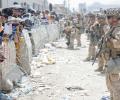
Taliban failed to honour Doha accord, never renounced Al-Qaeda: US general Mark Milley

'We should build a military with the capability to fight today's war on priority -- balancing it with the requirements of the future,' says Lieutenant General Anil Chait, one of the Indian Army's most cerebral thinkers who recently retired as chief of the Integrated Defence Staff, in his agenda for the new defence minister.

To rise quickly in the PLA's hierarchy, you need to be close to Xi Jinping. Retired RA&W officer Jayadeva Ranade on the changes in China's military leadership.
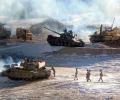
US Defence Secretary Llyod Austin described China as a pacing challenge for the United States.

"I think it's clear to me that the ISI has connections with terrorist groups," General Joseph Dunford, Chairman of the US Joint Chiefs of Staff said.

There is growing acceptance of the idea in the international community that engaging the Taliban government is a far better approach than ostracising it, observes Ambassador M K Bhadrakumar.

The defence ministry has signed off on a national security plan that it cannot fund. Ajai Shukla reports

'The procurement cycle still consumes too much time; little has changed.'

Prime Minister Modi felt there were too many silos with no arrangement to take a comprehensive view on national security. The PM has entrusted NSA Ajit Doval to evolve a comprehensive roadmap and get it implemented, reveals Nitin Gokhale, Editor-in-Chief, Strategic News International.
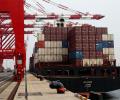
On June 1, 2010, under Indian Ports Act, 1908, govt declared Port Blair as 13th major port in India
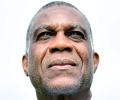
"The granting of the Freedom of the City of London recognises how they have added their voices to the growing global movement to stamp out racism."
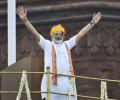
'Speaking this year from the ramparts of the Red Fort, he excelled himself in content, diction and delivery -- all extemporaneously flowing, replete with felicitous expressions and captivating word play. 'The only other Indian prime minister with whom he stands comparison is Jawaharlal Nehru who too shunned prepared speeches and established instant rapport with his audiences,' says B S Raghavan.
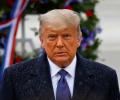
If push comes to shove, Trump is probably planning to order the US army to clear his path for a second term. What if the armed forces refuse to obey their commander-in-chief?, asks Ambassador M K Bhadrakumar.

'IAF is expanding at a rapid pace'

Inviting private sector in Indian Railways is a good idea.

'She has to get the funds, cut through bureaucratic flab, speed up modernisation, ensure planned acquisitions stick to timelines, make organisational changes and ensure the military is capable of performing the task that it is given,' says Brigadier S K Chatterjee (retd).

Opposition to tri-service structures comes not just from bureaucrats and politicians as the generals like to lament, but equally from within the military. Neither the army, navy or air force chiefs want to relinquish control over their theatre commands, with these cutting edge units placed under some commander who reports elsewhere, says Ajai Shukla.
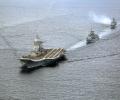
'The government has belied the hope that many harboured of change, efficiency and dismantling old practices as the defence ministry continues to pursue the same well trodden and wasteful path.'

'It is the government's most important duty to ensure that when war breaks out, the armed forces are absolutely ready to face the adversary -- well equipped, well trained and in high spirits,' says Brigadier Gurmeet Kanwal (retd).

Ajit Doval is now India's all-powerful security boss. This concentration of power disrupts our layered security system. Will it not weaken whatever remains of the power and authority of the home, defence and finance ministers? asks Shekhar Gupta.

As the number of cases crossed 2,56,000 with more than 7,100 fatalities, according to Union health ministry figures, and the country made a calibrated exit from the lockdown in non-containment zones, shop shutters in many malls went up for the first time since March 25 but the sprawling retail places were eerily empty.
'Once accession to Pakistan appeared unlikely, the British instituted Operations Gulmarg and Datta Khel respectively to foil possible accession to India.'

The State Department last week issued a worldwide travel alert warning Americans that Al Qaeda may be planning attacks in August, particularly in the Middle East.

'The clique that runs that country is treating us like suckers. We are very foolish, giving people money who involve themselves in activity that's harmful to America.' 'When you look at the cold hard facts, Pakistan is not an ally to the United States. They have facilitated, they have encouraged, they have been a protector of enemies.'

Will China's new military reforms endanger Xi Jinping's rule?
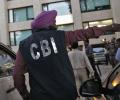
'What does the nation get out of the CBI's fabulous infrastructure? Very little that is useful.'

Rediff.com reproduces this 2014 interview with Tim Kaine where in he discusses the new opportunities to foster Indo-US trade and the improvement in ties.

'After a strategic pause though, Beijing will revive its policy of slowly creeping towards acquiring sovereignty over the South China Sea.'

The night before Sheena was allegedly killed, 'Indrani Madam instructed me to not send anyone up to her flat.' 'She told me to especially not allow Rahul Mukerjea.'

The White House said it has 'a large body' of evidence indicating that the Assad regime was responsible for the April 7 chemical attack in Duma.

20 years ago this day, May 11, 1998, India conducted its second nuclear test at Pokharan in Rajasthan. In a fascinating interview on Rediff.com, K Subrahmanyam revealed how Indian PMs reacted to nuclear ambitions.

'It appears that Prime Minister Modi has to undo 50 years of State monopoly in the defence sector during which public undertakings like HAL or DRDO monopolised defence production and development with disastrous consequences.'
 © 2026 Rediff.com - Advertise with us - Disclaimer - Privacy Policy - Sitemap - Feedback - About us - Terms of use - Grievances